Film Developing Tanks - Plastic vs. Stainless Steel?
The following is strictly my opinion and thought process on a topic that comes up from time to time and is one of personal choice based on my situation and needs for developing black and white film. There are many brands and models of plastic developing tanks and reels such as Paterson, AP/Kaiser and Jobo that can handle as little as one roll of 35mm film or larger sizes models that will handle multiple rolls of 35mm or 120 film. There are also corresponding stainless steel options - new and used - by brands such as Kalt, Samigon, Kinderman and Nikor. I'll be discussing what is probably the most popular basic style and size tank for developing film at home - and that would be tanks that can accommodate up to two 35mm reels or one of 120. Plastic and stainless steel are both viable solutions and there will always be a split among film photographers to which is their preferred choice. There are pros and cons for each. It all comes down to what works best or easiest for each photographers needs.
 
|

|
| Left side - Newly aquired Arista/AP Plastic double reel tank with two adjustable 35mm reels. Right side - My existing Kinderman double reel stainless steel tank with two fixed size 35mm reels. |
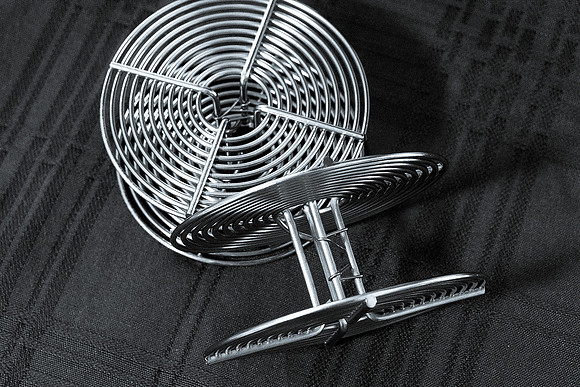
Back in the day when I shot quite a bit of 35mm and 120 roll film I had my darkroom set up with two enlargers and a large wooden sink / wet table. The temperature in my darkroom always ranged from 68 - 70 degrees - summer or winter - making it a very stable environment for developing black and white film. I owned and used only stainless steel tanks and reels back then. I would agitate my film by simply rolling the tank back and forth on its side 10 seconds every minute. Laying fairly flat, stainless tanks worked very nicely for this method of agitation and my darkroom sink had plenty of elbow room to do so. Alas, by 2003 I was off to the digital races - my sink / wet table was gone and and my basement darkroom was no longer set up for use.

|
|
| 2020 I started developing film for the 1st time since 2002 - Using a changing bag and my kitchen sink to process my film I needed to decide whether it would be plastic or stainless. - Which would work best for my new situation? |
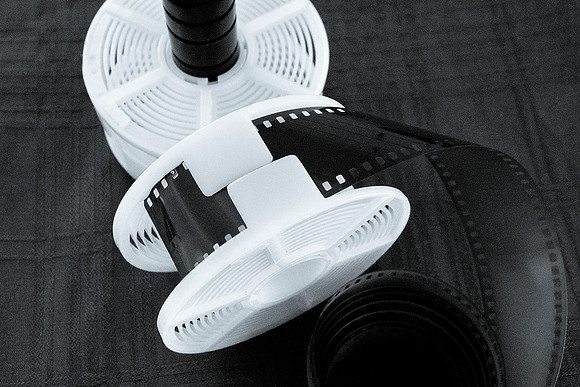
In 2020 I started shooting and developing 35mm black and white film again. My darkroom now happens to be a light tight changing bag that I use to load my exposed film into a recently acquired Arista / AP developing tank - which I now process quite conveniently at my kitchen sink. Now that I am using a changing bag - I have found it easier and quicker to guide and ratchet the film onto a plastic reel vs. cupping the film while rotating and guiding it on to a steel reel in the somewhat confined space of a changing bag. I find the AP / Kaiser style plastic reels with the oversized flange very quick and easy to load. One other adjustment I have made due to my current film processing location is my method of film agitation. I now do 10 second inversions every minute instead of rolling the tank back and forth on its side. I'm sure the plastic tank I own would roll agitate just fine - this choice was based on my now confined working area, either way this method happens to also work just nicely.
|
|
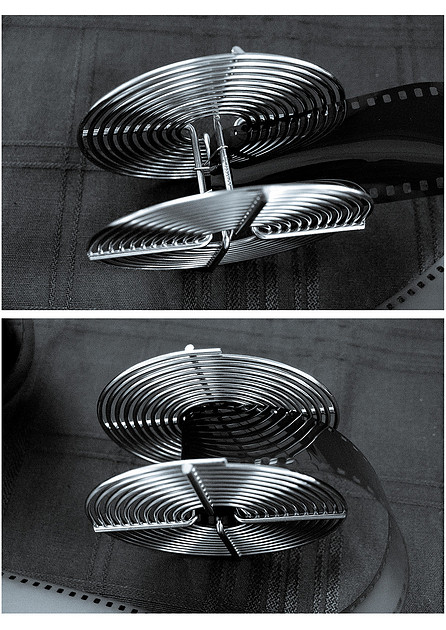
| Above shows how the film attaches to each of the reels. - The film can either be fed and ratcheted on to the plastic reel via the ball bearings that grab and pull the film along with each twist of the reel or by clipping the film to the center spindle of the stainless steel reel and spinning the reel with one hand as you cup and guide the film onto the reel with the other hand. |
Temperature and time - the two most important factors in my decision. Now that I would be developing my film at the kitchen sink I was looking for the best solution to make life easier for my situation - Since developer temperature affects the developing time I just wanted to simply mix my developer to a working solution at 68 degrees - pour it into the tank and that's it. I need my developer to maintain its temperature for as long s possible - which can run anywhere from 5 to 12 minutes - based on the type of film and developer I am using and how I shot that particular roll. Since my working area can range in temp. any where between 70-74 degrees I feel a tank being made of plastic vs. stainless steel would better insulate - better maintaining a constant temperature of my film developer once poured into the tank- allowing for more consistent results. These are my thoughts but it all depends on what you are looking for; Do you want to maintain the developer temperature in the tank without doing any thing else like I want? Or do you want to control it after the solution is in the tank, such as a water bath? If developing color film - which I am not planning on - placing your developing tank and chemical bottles into some type of temperature controlled water bath is generally needed to maintain a higher and constant temperature requirement - plastic and steel will both work but steel may be a better choice since it can adjust to temperature quicker.
|
|
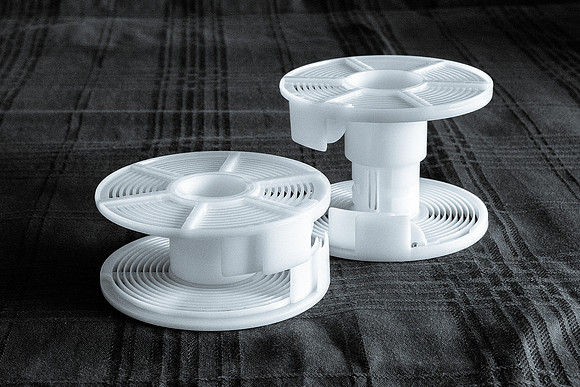
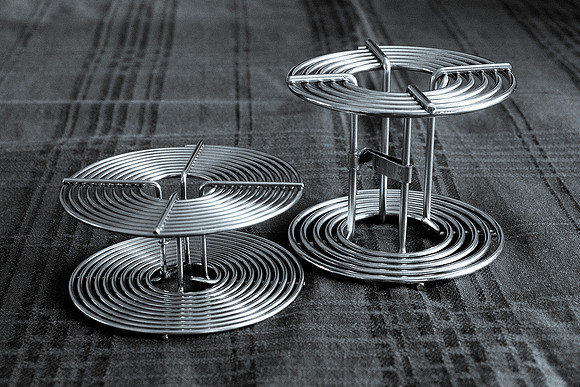
| Plastic reels are adjustable for 35mm or 120 roll film where stainless steel require the purchase of a separate size reel for 35mm and 120 |
If economy is important and even though stainless steel requires the initial cost of separate size reels for 35mm vs. 120 where as plastic reels are adjustable in size for either 35mm or 120 needing only one reel for both film sizes - steel still gets the nod in the long run regarding the ongoing cost of film developer. A plastic tank requires a larger volume of liquid to fill the tank than that of a stainless steel tank with the same reel capacity. My plastic tank which holds two 35mm reels requires 650ml or approx. 22 oz. of liquid to cover the two reels vs. my steel tank which requires 475ml or approx. 16 oz. for the same reel capacity. If one is looking to stretch the most for the money in regards to their film developer it would be stainless steel.
Taking all this into consideration - I went for an Arista / AP plastic tank with two 35mm reels. The following have factored into my decision. 1st - I use a very economical film developer so the cost of chemistry was not a big factor. 2nd - I favor the ease and speed of loading film onto the plastic reel especially the Arista/AP style. 3rd - but not previously mentioned - most plastic tanks fill and empty much quicker than stainless which can be quite important when developing times are very short. Lastly - but most importantly - temperature control - I favor the ability of the plastic tank to better maintain the chemistry temperature once poured into the tank due to it being more of an insulator than a conductor.
***One other note - I do a 2 minute pre-rinse at 68 degrees then pour that out before I add my developer of the same temperature. There is discussion on whether to pre-rinse or not. I do so not only to pre wet the film but to also help reach and maintain 68 degrees inside the plastic tank for as long as possible. Again, good technique or not - it' just my thought process and why I do so.
I hope my take on this topic has been helpful - especially for those just starting out with black and white film developing and may not have a permanent darkroom space. - And for those who have read this far - once again thanks for viewing (-: